
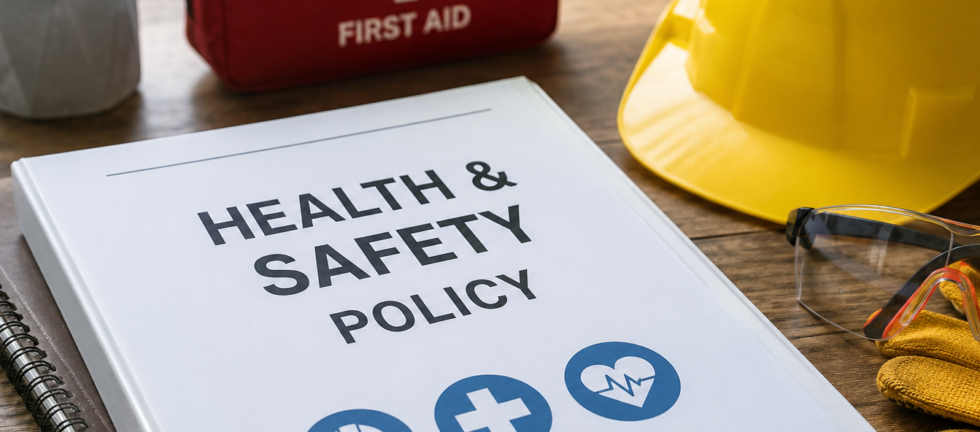
What are the basic SME health and safety responsibilities?
SME health and safety can feel like a large and technical subject, particularly when you run a small business without a dedicated health and safety team.
However, for many small, low-risk businesses, the legal requirements can be managed through sensible, proportionate arrangements. So, what are the basic health and safety duties that SME employers need to understand, and where should you begin?
What are an employer’s basic health and safety responsibilities?
Health and safety law applies from the moment you become an employer, regardless of the size of your business.
In practice, SME health and safety, means that you need to:
- identify and manage workplace risks;
- provide a safe working environment and safe equipment;
- provide employees with appropriate information, instruction, training and supervision;
- appoint someone competent to help manage health and safety;
- consult employees about health and safety matters;
- hold employers’ liability insurance, where required;
- report certain workplace accidents, diseases and dangerous occurrences; and
- maintain appropriate health and safety policies and records.
For most SMEs, these responsibilities can be managed through straightforward and practical arrangements that reflect the nature and level of risk within the business.
Carry out workplace risk assessments
Every employer must identify anything within the workplace or working practices that could cause harm and take reasonable steps to control those risks. This process is known as a risk assessment.
A suitable risk assessment should include:
- identifying hazards, such as unsafe equipment, trip hazards, manual handling, hazardous substances or workplace stress;
- considering who may be harmed and how;
- deciding what precautions or control measures are required;
- recording and implementing those measures; and
- reviewing the assessment regularly.
Risk assessments should also be reviewed following an accident, a significant change in working practices, the introduction of new equipment or where there is reason to believe that the existing assessment is no longer effective.
Employers with five or more employees must record the significant findings of their risk assessments. Even where a business has fewer than five employees, keeping a written record is good practice and can help demonstrate that risks have been considered and managed.
Provide a safe working environment
Employers have a general duty to protect, so far as is reasonably practicable, the health, safety and welfare of their employees.
Depending on the nature of the workplace, this may include providing:
- safe equipment and machinery that is properly maintained;
- a clean, suitably lit and adequately ventilated workplace;
- safe access to and from working areas;
- safe systems of work, particularly for physical, repetitive or higher-risk activities;
- appropriate personal protective equipment where risks cannot be controlled by other means; and
- suitable welfare facilities, including toilets, washing facilities, drinking water and rest areas.
An employer’s responsibilities are not limited to direct employees. Businesses must also consider other people who may be affected by their activities, including contractors, customers, visitors and members of the public.
Appoint a competent person
Every employer must appoint one or more competent people to assist with meeting their health and safety responsibilities.
A competent person should have sufficient skills, knowledge and experience to recognise hazards and help the business put appropriate controls in place.
For a small or relatively low-risk business, the competent person could be:
- the business owner;
- a manager or experienced employee; or
- an external health and safety adviser.
Formal qualifications are not always necessary. However, specialist advice may be required where the work is complex or involves significant risks, such as construction, machinery, hazardous substances or work at height.
Using an external adviser does not transfer the employer’s legal responsibilities. The employer remains accountable for how health and safety is managed within the business.
Consult your employees
Employers must consult employees about health and safety matters that affect them.
This should be a genuine two-way process and may include discussing:
- the risks connected with their work;
- the measures in place to control those risks;
- proposed changes to equipment or working practices;
- the information and training employees need; and
- any health and safety concerns employees wish to raise.
In a small business, consultation may take place directly through team meetings, individual discussions or toolbox talks. Where employees are represented by a recognised trade union or an elected health and safety representative, consultation may need to take place through those representatives.
Employees often have valuable practical knowledge about the work they perform and may identify risks or solutions that are not immediately apparent to management.
Have employers’ liability insurance
Most businesses that employ staff are legally required to hold employers’ liability insurance, although limited exemptions apply.
The insurance provides cover where an employee becomes ill or is injured because of the work they carry out for the business.
Where the requirement applies, an employer must generally:
- have cover of at least £5 million;
- obtain the insurance from an authorised insurer; and
- display the insurance certificate where employees can access it, which may include making it available electronically.
A business can be fined up to £2,500 for every day that it does not have appropriate employers’ liability insurance in place.
Employers should check their specific position with their insurance provider if they are uncertain whether an exemption applies.
Provide information, training and supervision
Employees cannot be expected to work safely unless they understand the risks associated with their role and know what procedures they must follow.
Appropriate arrangements may include:
- health and safety induction training for new starters;
- clear instructions on safe working procedures;
- training on equipment, machinery or hazardous substances;
- manual handling training where relevant;
- information about emergency and accident-reporting procedures;
- additional supervision for new or inexperienced employees; and
- refresher training when equipment, risks or working practices change.
The level of training and supervision should reflect the nature of the work and the risks involved. An office-based employee is likely to require a different level of training from someone operating machinery, working at height or handling hazardous materials.
Training should be delivered during working hours and at no cost to employees. Employers should also retain suitable records of the training provided.
Provide appropriate first aid arrangements
Employers are responsible for ensuring that employees receive immediate attention if they become injured or unwell at work.
The arrangements required will depend on factors such as:
- the number of employees;
- the nature and level of workplace risks;
- working patterns and shift arrangements;
- whether employees work remotely or alone; and
- the distance from emergency medical services.
As a minimum, employers should carry out a first aid needs assessment, provide an appropriately stocked first aid kit and appoint someone to take responsibility for first aid arrangements.
Depending on the outcome of the assessment, the business may also require trained first aiders.
Employees should be told what the first aid arrangements are and how to obtain assistance.
Report certain accidents and incidents
Certain work-related injuries, occupational diseases and dangerous occurrences must be reported to the relevant enforcing authority under the Reporting of Injuries, Diseases and Dangerous Occurrences Regulations, commonly known as RIDDOR.
Reportable events can include:
- work-related deaths;
- specified serious injuries;
- work-related injuries that leave a worker unable to undertake their normal duties for more than seven consecutive days;
- certain diagnosed occupational diseases;
- dangerous occurrences or specified near-miss events; and
- certain injuries to members of the public.
Not every workplace accident is reportable under RIDDOR. However, businesses should have a clear process for recording and reviewing accidents, incidents and near misses.
Employers with more than ten employees must keep an accident book or an equivalent recording system. Smaller businesses should still maintain a suitable and confidential record of workplace accidents and incidents.
Accident records can help the employer identify patterns, review risk assessments and prevent similar incidents from happening again.
Put the right policy and records in place
Every business should have arrangements for managing health and safety.
Where the business employs five or more people, it must have a written health and safety policy. The policy should explain:
- the business’s overall commitment to health and safety;
- who is responsible for particular health and safety matters; and
- the practical arrangements used to manage workplace risks.
The policy should be shared with employees and reviewed regularly, particularly where there are changes to the business, its workforce or its working practices.
Depending on the business and the number of employees, relevant documents may include:
- a written health and safety policy;
- workplace and role-specific risk assessments;
- fire risk assessments and emergency procedures;
- accident and incident records;
- training and induction records;
- equipment inspection and maintenance records;
- first aid arrangements;
- records relating to hazardous substances; and
- personal protective equipment records.
Good SME health and safety records can help demonstrate that risks have been properly managed.
Employers must also display the approved Health and Safety Law poster or provide each employee with the equivalent approved leaflet.
A practical example
Consider a small manufacturing business that has never formally documented its health and safety arrangements.
An employee suffers a hand injury while using machinery that has not been properly guarded. When the incident is investigated, the business cannot produce a suitable risk assessment, evidence of employee training or records showing that the machinery was regularly inspected and maintained.
The business may face enforcement action, financial penalties, an employment-related claim and reputational damage.
A suitable risk assessment, proper machine guarding, equipment maintenance and appropriate employee training might have prevented the injury. At the very least, accurate records would have helped the business demonstrate the steps it had taken to manage the risk.
What should your business have in place?
The exact requirements will depend on the size and nature of your organisation, but most SME employers should be able to demonstrate that they have:
- identified the main risks within the workplace;
- completed suitable risk assessments;
- appointed a competent person;
- put appropriate control measures in place;
- consulted employees about health and safety;
- provided suitable information, training and supervision;
- arranged appropriate first aid provision;
- obtained employers’ liability insurance, where required;
- established an accident-recording and RIDDOR-reporting process;
- provided the required Health and Safety Law poster or leaflet; and
- prepared and communicated a written health and safety policy where they employ five or more people.
In summary
Health and safety responsibilities can initially sound daunting. Effective SME health and safety comes down to identifying risks, implementing sensible controls and keeping suitable records.
Employers should regularly ask themselves:
- Have we identified the main risks associated with our work?
- Are our risk assessments still current and effective?
- Do employees understand the procedures they are expected to follow?
- Are training, equipment checks and incidents properly recorded?
- Are employees encouraged to raise health and safety concerns?
- Could we demonstrate to an inspector that we have taken reasonable steps to manage workplace risks?
Where the answer to any of these questions is no, it is worth reviewing the business’s arrangements before an accident or incident forces the issue.
JT HRConsultancy can support small and medium-sized businesses with health and safety policies, employee information, induction procedures, training records and associated HR documentation. Where specialist technical advice is required, we can also help you identify when a qualified health and safety professional should be involved.
Contact JT HRConsultancy to discuss the documentation and procedures your business should have in place.
For further information or support, contact JT HR Consultancy at www.jt-hrconsultancy.com.